Oct. 09, 2026
Share:
Because they are rarely quoting the same garment. Two apparently identical sweaters can differ in yarn count, blend ratio, knitting gauge, panel-forming method, finishing depth, defect allowance and how much of the packing and trim cost is included in the quoted term, and any one of those moves the unit figure double digits. The practical test is this: a gap under roughly 5 percent is usually overhead and margin structure, and it is negotiable; a gap of 15 percent or more almost always means something structural differs, and chasing the lower number without aligning the specification transfers the difference into quality claims rather than savings. So ask for the breakdown before you ask for the discount, starting with whether both quotes assume the same knit gauge and machine class.
In short: compare specifications, not totals. The cheapest way to make two quotes match is to remove something from one of them, which is usually not the outcome the buyer intended.
|
Cost element |
What moves it |
Where it carries most weight |
How you can verify it |
|
Yarn purchase |
Fiber type, count, blend ratio, whether the shade is stock or custom dyed |
Fine-gauge cashmere, mohair and alpaca programs |
Ask for the yarn count and the supplier or lot reference |
|
Knitting time |
Gauge, stitch structure, machine class, whether panels are fully fashioned |
Intarsia, jacquard and complex cable structures |
Ask how many minutes per panel and on which gauge |
|
Linking and hand finishing |
Number of pieces to join, collar construction, hand-worked details |
Fully fashioned garments with set-in sleeves |
Ask whether linking is hand or machine, and how many operators per line |
|
Washing and finishing |
Shrinkage treatment, brushing, steaming, pressing |
Wool and cotton programs where dimensional stability is critical |
Ask whether fabric is pre-washed and whether a wash test result accompanies the sample |
|
Decoration |
Embroidery stitch count, print method, applique and embellishment |
Placement-heavy styles and heavy stitch-count logos |
Ask for stitch counts, not just "embroidery" |
|
Trims and labeling |
Woven, satin or cotton labels, hangtags, buttons, zippers |
Programs with private branding across small volumes |
Check whether trim minimums sit above your order quantity |
|
Packing labor |
Individual poly bags, folding, steaming, carton packing method |
Retail-ready packing requirements |
Confirm whether packing labor is inside or outside the quoted price |
|
Quality control and defect allowance |
Number of inspection stages and the accepted defect rate |
Any program shipping direct to retail |
Ask what happens to borderline pieces |
FNJIA splits its own quotes across these same lines, as any factory should be willing to. Usually only one or two dominate a given style, so asking which one it is resolves most apparent pricing mysteries quickly.
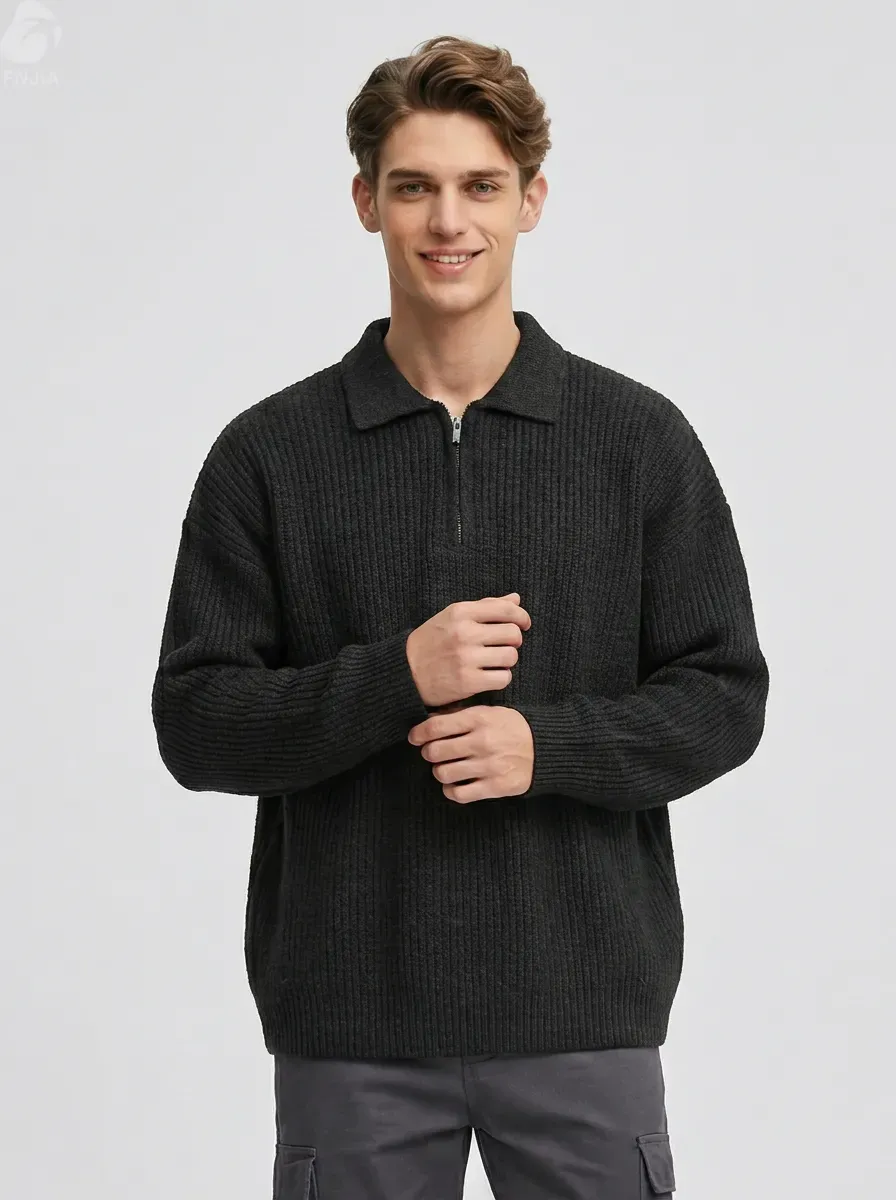
Four specification choices produce visually similar sweaters with materially different cost bases. All four are legitimate; the problem is only when they go unstated.
|
Build choice |
Cost effect |
What it changes in the finished garment |
Risk of leaving it unspecified |
|
Yarn count one step coarser |
Lower material cost, heavier hand |
Softer drape is replaced by a firmer, sometimes boardier feel |
Customer perceives a cheaper product than intended |
|
Lower natural fiber share in the blend |
Noticeably lower invoice |
Less warmth and different pilling behavior |
Returns cluster in the second wash cycle |
|
Cut panels instead of fully fashioned panels |
Shorter knitting time, more cutting waste |
Seam lines fall differently and shoulder shaping is flatter |
Fit consistency drifts across sizes |
|
Printing instead of embroidery or intarsia |
Usually lower unit cost with higher setup cost |
Flat surface instead of raised texture, different wash durability |
Cracking or fading appears earlier in the product life |
We set out the construction trade-off in more detail in our comparison of fully fashioned and cut-and-sew knitwear, because that single decision shapes fit, waste and cost at the same time. Fiber choice interacts with it, and our knitwear fabric guide covers how cotton, wool, cashmere and acrylic behave once a garment is worn and washed.
A quote that sits well below the rest of the field is rarely magic. It is usually one of five substitutions, none of which are visible in a photograph.
Yarn sourced one count coarser or with a higher synthetic share than the sample you approved.
Pre-production washing skipped, so the garment meets measurements before the customer's first wash and not after.
Tolerances widened, which allows a wider spread of fit within one delivery lot.
Inspection stages reduced, so borderline pieces ship instead of being reworked.
Packing, labels and cartons excluded from the quoted term and invoiced later.
The first four surface after delivery, which is precisely when they are expensive. FNJIA's own quality process runs across incoming material inspection, pre-production review, in-line inspection, random sampling, final inspection, packing and labeling verification, and a pre-shipment check, and we wash fabric before cutting because dimensional stability problems cannot be corrected after garments are boxed.
Usually yes for planned replenishment, rarely yes for anything tied to a launch date. The decision is cash flow against calendar, and the numbers below are the ones we publish for our own shipments.
|
Method |
Transit time |
Suited to |
Watch out for |
|
Express courier, door to door |
3 to 5 working days via FedEx, DHL or UPS |
Samples and urgent top-up orders |
You clear customs and pay any tariff yourself |
|
Air freight |
12 to 15 working days |
Mid-season reorders where the margin supports it |
Cost per kilo rises sharply below roughly 21 kilograms |
|
Sea freight |
25 to 40 days |
Bulk seasonal programs planned well ahead |
Missed cut-offs push delivery by weeks rather than days |
One pricing quirk is worth knowing because it surprises people: shipping 19 kilograms can cost more than shipping 21 kilograms, since freight pricing bands reward reaching a higher weight tier. For that reason we advise consolidating until you pass the threshold rather than splitting consignments. Destination-country tariffs sit outside any factory's control, so whoever files your entry should confirm the duty treatment before you commit to a landed cost target. If you ship into Europe and want the clearance handled for you, our write-up on door-to-door apparel delivery to Europe explains how that arrangement works in practice.
Normalize five variables before comparing totals, or the comparison is meaningless.
Send the identical request package to both factories, including size spec, tolerances and size ratio.
Request a breakdown of yarn, knitting, finishing, decoration, trims and packing rather than a single unit price.
Align the trade term, the port or Incoterm, and whether duty and clearance are included.
Agree the defect allowance and what happens to pieces that fail final inspection.
Fix how the lead time is counted, normally from pre-production sample approval rather than from deposit.
|
Parameter to align |
Typical confusion |
Consequence if left fluid |
|
Order quantity and colorway split |
One quote assumes four colorways, the other one |
Prices differ 10 percent for reasons unrelated to workmanship |
|
Size set and ratio |
One assumes four sizes, the other a full grade run |
Both the yardage and the grading labor change silently |
|
Labels and hangtags |
One includes them, one quotes them separately |
Trim minimums appear as an unexpected line |
|
Packing specification |
Individually bagged and boxed versus bulk packed |
Packing labor differences masquerade as margin differences |
|
Payment structure |
Deposit, balance timing and any sample fee credit |
Comparable unit prices but very different cash exposure |
For reference, FNJIA charges 50 dollars per piece for a simple sample and up to 80 dollars for a more complicated one, quote roughly 7 to 12 working days from payment to sample receipt, and run bulk production in 15 to 20 working days after the pre-production sample is approved. Published minimums are 100 pieces per item on our custom program and 300 pieces per design in our FAQ, with private labels and custom hangtags carrying a 1,000-piece minimum; which floor applies depends on whether the yarn is stock or custom spun and dyed. We hold surplus labels for your later runs rather than scrapping them, and details of our compliance-related work are collected in our certified knitwear manufacturing overview.
Q: Can you match a price another factory quoted us?A: Sometimes, but only once we can see where the difference sits. Comparing an itemized quote against ours usually reveals a yarn, gauge or finishing difference, and we will tell you which line changes rather than quietly substituting materials to reach a number.
Q: Why does the second colorway cost more per piece than the first?A: Each colorway often means its own dye lot and sometimes a separate knitting run, so setup and minimum-purchase costs repeat. Consolidating colors into one production run, or using stock shades for the test quantity, is the usual way to close that gap.
Q: How much does shipping method actually change landed cost?A: Frequently more than the manufacturing cost difference between two factories. Sea freight takes the longest but spreads cost better over volume, while express courier at 3 to 5 working days suits samples and urgent top-ups; the right answer depends on whether your constraint is cash or calendar.
Q: Is a lower price riskier for small first orders?A: It can be, because small runs have less room to absorb rework. Below roughly 100 to 300 pieces per design, most factories recover their setup cost in the unit price either way, so a very low quote usually signals a discarded process step rather than an efficiency gain.
Q: What should we do first if our target price is below every quote received?A: Change the specification rather than the supplier. Dropping one gauge step, moving from intarsia to print, reducing colorways, or accepting stock-shade yarn each removes cost from a specific line, and seeing those options priced individually is more productive than asking for a blanket discount.
Send your style file, target FOB price and intended quantity to fnjia@fnjiaknitwear.com. FNJIA will return a cost breakdown by yarn, gauge, finishing, decoration and packing, flag which specification choices are driving your number, and quote the alternatives side by side so you can decide what to change.
HOT PRODUCTS